
O papel dos treinadores esportivos na promoção da saúde e do bem-estar de atletas com deficiências de desenvolvimento intelectual
Downloads
Resumo
É amplamente reconhecido que crianças e adultos com deficiência apresentam pior estado de saúde e bem-estar emocional em comparação com seus pares sem deficiência — uma situação agravada pelo menor acesso a serviços de saúde e a atividades que promovem a saúde. Uma solução ainda pouco explorada consiste em mobilizar iniciativas comunitárias, como o esporte, para promover uma saúde melhor. A Special Olympics é uma organização esportiva internacional, presente em cerca de 200 países e jurisdições, que envolve, anualmente, pouco menos de quatro milhões de atletas com deficiência intelectual. Existem poucas pesquisas sobre a percepção de treinadores esportivos a respeito da incorporação de ações de promoção da saúde em seus treinamentos. Da mesma forma, tem-se dado pouca atenção à compreensão que os próprios atletas têm sobre o que a saúde significa para eles e quais ações os tornariam mais saudáveis. Foi realizado um estudo qualitativo e descritivo nesta área.
Referências
(1) 1.World Health Organisation . Global Report on Health Equity for Persons with Disabilities. World Health Organisation; Geneva, Switzerland: 2022.
(2) Havercamp S.M., Scott H.M. National health surveillance of adults with disabilities, adults with intellectual and developmental disabilities, and adults with no disabilities. Disabil. Health J. 2015;8:165–172. doi: 10.1016/j.dhjo.2014.11.002.
(3) Mitra M., Long-Bellil L., Moura I., Miles A., Kaye H.S. Advancing Health Equity and Reducing Health Disparities for People with Disabilities in the United States: Study examines health equity and health disparities for people with disabilities in the United States. Health Aff. 2022;41:1379–1386. doi: 10.1377/hlthaff.2022.00499.
(4) Bright T., Kuper H. A systematic review of access to general healthcare services for people with disabilities in low and middle income countries. Int. J. Environ. Res. Public Health. 2018;15:1879. doi: 10.3390/ijerph15091879.
(5) Scott H.M., Havercamp S.M. Systematic review of health promotion programs focused on behavioral changes for people with intellectual disability. Intellect. Dev. Disabil. 2016;54:63–76. doi: 10.1352/1934-9556-54.1.63.
(6) Byrne J.H., Lennox N.G., Ware R.S. Systematic review and meta-analysis of primary healthcare interventions on health actions in people with intellectual disability. J. Intellect. Dev. Disabil. 2016;41:66–74. doi: 10.3109/13668250.2015.1105939.
(7) Chinn D., Homeyard C. Easy read and accessible information for people with intellectual disabilities: Is it worth it? A meta-narrative literature review. Health Expect. 2017;20:1189–1200. doi: 10.1111/hex.12520.
(8) World Health Organization . Global Status Report on Physical Activity 2022: Country Profiles. World Health Organization; Geneva, Switzerland: 2022.
(9) Special Olympics. (accessed on 13 January 2026). Available online: https://www.specialolympics.org/
(10) Centre for Disease Control (CDC) (accessed on 13 January 2026); Available online: https://www.cdc.gov/disability-and-health/articles-documents/cdc-and-special-olympics-inclusive-health.html.
(11) Marks B., Sisirak J., Heller T., Wagner M. Evaluation of community-based health promotion programs for Special Olympics athletes. J. Policy Pract. Intellect. Disabil. 2010;7:119–129. doi: 10.1111/j.1741-1130.2010.00258.x.
(12) Rubenstein E., DuBois L., Sadowsky M., Washburn K., Forquer M., Stanish H., Shriver T. Evaluating the potential of Special Olympics fitness models as a health intervention for adults with intellectual disabilities. Disabil. Health J. 2020;13:100850. doi: 10.1016/j.dhjo.2019.100850.
(13) Van Hoye A., Johnson S., Geidne S., Vuillemin A. Relationship between coaches’ health promotion activities, sports experience and health among adults. Health Educ. J. 2020;79:763–774. doi: 10.1177/0017896920919777.
(14) Commission of the European Communities . White Paper on Sport. EU Commission; Brussels, Belgium: 2007.
(15) Mansfield L., Kay T., Anokye N., Fox-Rushby J. A qualitative investigation of the role of sport coaches in designing and delivering a complex community sport intervention for increasing physical activity and improving health. BMC Public Health. 2018;18:1196. doi: 10.1186/s12889-018-6089-y.
(16) Tézier B., Barros K., Geidne S., Bardid F., Grieco S., Johnson S., Kokko S., Lambe B., Lefebvre A., Lane A., et al. The health promoting sports coach: Theoretical background and practical guidance. BMC Sports Sci. Med. Rehabil. 2025;17:17. doi: 10.1186/s13102-025-01056-y.
(17) Davies K., Gray M. The place of service-user expertise in evidence-based practice. J. Soc. Work. 2017;17:3–20. doi: 10.1177/1468017316637222.
(18) Bossink L.W., van der Putten A.A., Vlaskamp C. Understanding low levels of physical activity in people with intellectual disabilities: A systematic review to identify barriers and facilitators. Res. Dev. Disabil. 2017;68:95–110. doi: 10.1016/j.ridd.2017.06.008.
(19) Smith B., Williams O., Bone L., Collective T.M. Co-production: A resource to guide co-producing research in the sport, exercise, and health sciences. Qual. Res. Sport Exerc. Health. 2023;15:159–187. doi: 10.1080/2159676X.2022.2052946.
(20) Bradshaw C., Atkinson S., Doody O. Employing a Qualitative Description Approach in Health Care Research. Glob. Qual. Nurs. Res. 2017;4:2333393617742282. doi: 10.1177/2333393617742282.
(21) Braun V., Clarke V. Using thematic analysis in psychology. Qual. Res. Psychol. 2006;3:77–101. doi: 10.1191/1478088706qp063oa.
(22) National Health Service (NHS England) (accessed on 6 January 2026). Available online: https://www.nhs.uk/live-well/
(23) McConkey R., Sadowsky M., Shellard A. An international survey of obesity and underweight in youth and adults with intellectual disabilities. J. Intellect. Dev. Disabil. 2019;44:374–382. doi: 10.3109/13668250.2018.1426287.
(24) O’Brien P., McConkey R., O’Brien B., Butler S., Garcia Iriarte E. From Inclusive Research to Inclusive Evaluation: Empowering People with Intellectual Disabilities to Shape the Services They Use. Soc. Sci. 2026;15:4. doi: 10.3390/socsci15010004.
(25) Scifo L., Chicau Borrego C., Monteiro D., Matosic D., Feka K., Bianco A., Alesi M. Sport intervention programs (SIPs) to improve health and social inclusion in people with intellectual disabilities: A systematic review. J. Funct. Morphol. Kinesiol. 2019;4:57. doi: 10.3390/jfmk4030057.
(26) Geidne S., Kokko S., Lane A., Ooms L., Vuillemin A., Seghers J., Koski P., Kudlacek M., Johnson S., Van Hoye A. Health promotion interventions in sports clubs: Can we talk about a setting-based approach? A systematic mapping review. Health Educ. Behav. 2019;46:592–601. doi: 10.1177/1090198119831749.
(27) Helsper N., Dippon L., Birkholz L., Rütten A., Kohler S., Weber P., Pfeifer K., Semrau J. What makes community-based, multilevel physical activity promotion last? A systematic review with narrative synthesis on factors for sustainable implementation. Perspect. Public Health. 2025;145:260–271. doi: 10.1177/17579139231186693.
(28) Sandjojo J., Eltringham E.G., Gebhardt W.A., Zedlitz A.M., Embregts P.J., Evers A.W. Self-management interventions for people with intellectual disabilities: A systematic review. Patient Educ. Couns. 2020;103:1983–1996. doi: 10.1016/j.pec.2020.06.009.
(29) Bondár R.Z., Di Fronso S., Bortoli L., Robazza C., Metsios G.S., Bertollo M. The effects of physical activity or sport-based interventions on psychological factors in adults with intellectual disabilities: A systematic review. J. Intellect. Disabil. Res. 2020;64:69–92. doi: 10.1111/jir.12699.
(30) Martin A.M., Divane S., Twomey S., O’Neill L., McCarthy J., Egan C., Dalton C., Caples M. Don’t Mention the Diet! A health promotion initiative to support healthy diet and lifestyle decision-making by people with intellectual disability. Br. J. Learn. Disabil. 2021;49:475–481. doi: 10.1111/bld.12382.
(31) Schell S.F., Luke D.A., Schooley M.W., Elliott M.B., Herbers S.H., Mueller N.B., Bunger A.C. Public health program capacity for sustainability: A new framework. Implement. Sci. 2013;8:15. doi: 10.1186/1748-5908-8-15.
(32) Borland R.L., Cameron L.A., Tonge B.J., Gray K.M. Effects of physical activity on behaviour and emotional problems, mental health and psychosocial well-being in children and adolescents with intellectual disability: A systematic review. J. Appl. Res. Intellect. Disabil. 2022;35:399–420. doi: 10.1111/jar.12961.
(33) Eather N., Wade L., Pankowiak A., Eime R. The impact of sports participation on mental health and social outcomes in adults: A systematic review and the ‘Mental Health through Sport’ conceptual model. Syst. Rev. 2023;12:102. doi: 10.1186/s13643-023-02264-8.
(34) Lloyd M., Temple V.A., Foley J.T., Yeatman S., Lunsky Y., Huang A., Balogh R. Young adults with intellectual and developmental disabilities who participate in Special Olympics are less likely to be diagnosed with depression. Soc. Psychiatry Psychiatr. Epidemiol. 2023;58:1699–1708. doi: 10.1007/s00127-022-02406-8.
(35) Ohrnberger J., Fichera E., Sutton M. The relationship between physical and mental health: A mediation analysis. Soc. Sci. Med. 2017;195:42–49. doi: 10.1016/j.socscimed.2017.11.008.
(36) Gilbert N., Dudfield O., Bull F. Embracing community sport to promote global health. Lancet Diabetes Endocrinol. 2024;12:616–617. doi: 10.1016/S2213-8587(24)00224-9.
Artigo adaptado e traduzido para o português pelos editores de OLYMPIKA MAGAZINE para republicação, conforme normas de submissão do periódico. Versão original em: https://pmc.ncbi.nlm.nih.gov/articles/PMC13206147/. LICENÇA ORIGINAL E DA VERSÃO: https://creativecommons.org/licenses/by/4.0/.
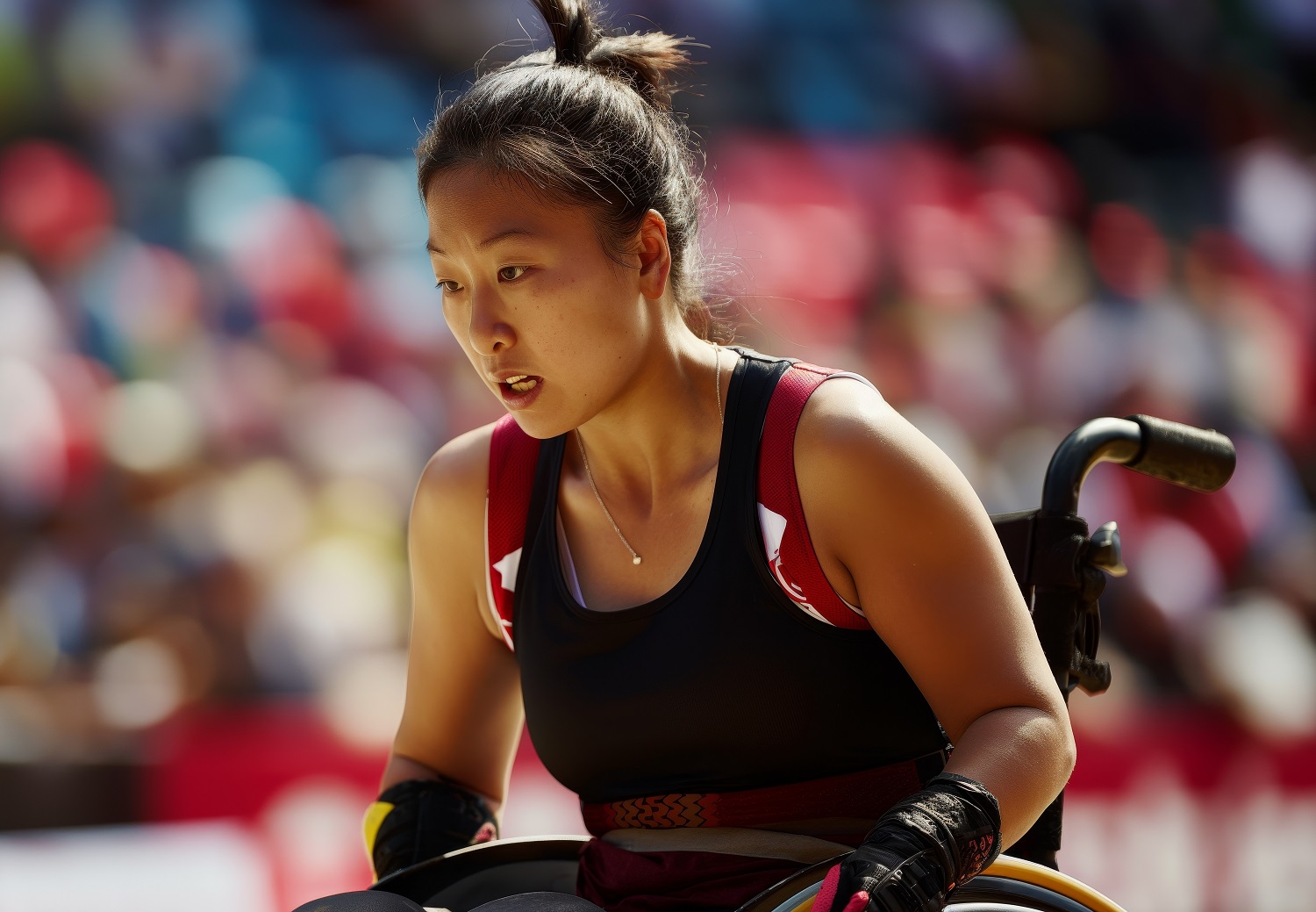
IMAGEM MERAMENTE ILUSTRATIVA. Image by magnific - AI-generated
Publicado
Como Citar / Vancouver
Edição
Seção
ARK
Licença
Copyright (c) 2026 Roy McConkey, Fiona Murray

Este trabalho está licenciado sob uma licença Creative Commons Attribution 4.0 International License.